 11
11
Success does not always follow a conventional path. Some people approach challenges differently, see possibilities where others see limitations, and bring fresh perspectives to situations that demand creativity and innovation. For Charles H. Mousseau Jr., understanding these differences is central to his work as an author and advocate for a more empowering perspective on Attention-Deficit/Hyperactivity Disorder (ADHD).
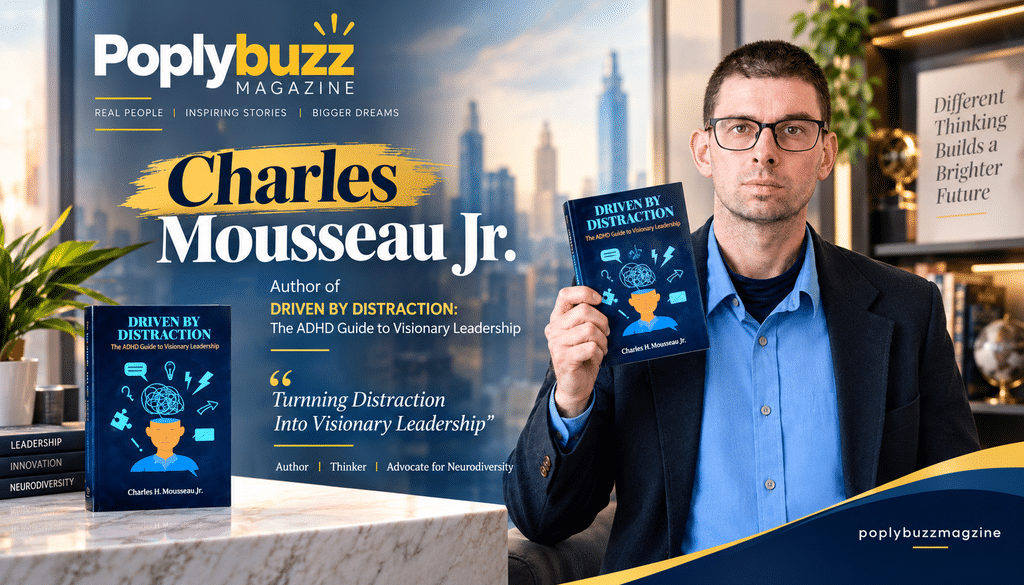
Through his book, DRIVEN BY DISTRACTION: The ADHD Guide to Visionary Leadership, Mousseau challenges readers to reconsider the way ADHD is understood, particularly in professional environments where traditional expectations often define what effective leadership should look like. His work explores the relationship between neurodiversity, leadership, entrepreneurship, and personal growth, encouraging individuals to recognize abilities that may otherwise be overlooked.
At the heart of his message is a simple but meaningful idea: thinking differently does not have to be a disadvantage. With greater self-awareness, appropriate support, and the right strategies, individuals can learn to work with their unique strengths and find more effective ways to achieve their goals.
For many people, ADHD is primarily associated with difficulties involving attention, organization, impulsivity, or managing everyday responsibilities. Although these challenges can be significant and deserve proper understanding, they do not tell the complete story of an individual’s abilities, personality, or potential.
Mousseau’s approach encourages a broader conversation. Rather than viewing ADHD only through the lens of limitations, he invites readers to explore how certain characteristics associated with ADHD may also contribute to creativity, curiosity, adaptability, and the ability to generate unconventional ideas.
This perspective is particularly relevant in a world where innovation often depends on questioning established methods and approaching problems from unexpected angles. People do not all learn, communicate, concentrate, or solve problems in the same way. Recognizing these differences can help create environments where more individuals have the opportunity to contribute meaningfully.
However, embracing a strengths-based perspective does not mean overlooking the genuine difficulties ADHD can create. Instead, it means understanding the whole person, acknowledging areas where support may be needed, and making room for abilities that conventional assumptions might fail to recognize.
Through DRIVEN BY DISTRACTION, Mousseau encourages readers to move beyond narrow definitions and consider what becomes possible when people are given the tools and confidence to understand themselves better.
The title DRIVEN BY DISTRACTION immediately challenges a familiar assumption: that distraction must always stand in the way of achievement. Mousseau uses this idea to open a wider discussion about how individuals with ADHD can approach their ambitions, develop self-awareness, and discover leadership styles that reflect their natural ways of thinking.
The book is intended for individuals with ADHD, aspiring leaders, entrepreneurs, and anyone who has experienced the frustration of feeling misunderstood because their mind works differently from the expectations around them.
Rather than suggesting that success requires everyone to follow the same formula, its central message emphasizes the value of understanding individual differences. People who struggle with conventional systems may benefit from discovering alternative approaches that better suit their needs, whether in managing responsibilities, developing ideas, working with others, or pursuing long-term goals.
For readers who have spent years focusing on what they find difficult, this shift in perspective can be especially meaningful. It invites them to ask different questions: What environments help me perform at my best? Which of my abilities do I tend to overlook? How can I develop practical strategies that support my ambitions without trying to become someone I am not?
These questions make the book’s message relevant beyond the workplace. Understanding one’s strengths and challenges can influence relationships, education, personal decisions, and the confidence to pursue opportunities that once seemed out of reach.
Leadership is often associated with confidence, organization, consistency, and the ability to make decisions under pressure. While these qualities can be important, effective leadership also requires imagination, flexibility, problem-solving, and the willingness to consider possibilities others may not immediately see.
Mousseau’s work explores how a broader understanding of ADHD can contribute to a more inclusive definition of leadership. Some individuals with ADHD may experience strengths such as creative thinking, enthusiasm for new ideas, or intense engagement with subjects that capture their interest. These characteristics can be valuable in the right circumstances, although individual experiences vary considerably.
The challenge is learning how to channel personal strengths effectively while developing strategies for areas that require additional attention. Creativity, for example, can generate exciting possibilities, but turning those possibilities into completed projects may require structure, planning, and consistent follow-through.
This is where self-awareness becomes essential. Understanding personal working patterns can help individuals identify useful routines, establish realistic priorities, seek complementary skills within a team, and build systems that make their ambitions more achievable.
By encouraging readers to consider these possibilities, Mousseau contributes to an important discussion about leadership that values different perspectives rather than expecting every leader to think and operate identically.
Entrepreneurship frequently involves uncertainty, experimentation, and the ability to recognize opportunities that others have overlooked. Building something new requires more than a good idea; it also demands resilience, practical decision-making, and the patience to navigate setbacks.
For entrepreneurs with ADHD, understanding their individual strengths and challenges can be an important part of that journey. An interest-driven approach may help some individuals become deeply engaged with a project, while creative thinking may encourage them to explore alternative solutions. At the same time, managing deadlines, maintaining focus on routine tasks, and organizing multiple responsibilities can require deliberate systems and support.
Mousseau’s message invites readers to consider how a better understanding of themselves can help them make more informed choices about the way they work. Instead of measuring their potential exclusively against conventional expectations, they can explore approaches that combine their abilities with practical tools for managing difficulties.
This does not mean ADHD automatically makes someone a better entrepreneur or that every challenge can be transformed into an advantage. Success depends on many factors, including experience, resources, opportunity, support, and persistence. The more useful lesson is that a diagnosis or a particular way of thinking should not, by itself, determine how far a person believes they can go.
For aspiring entrepreneurs and creative professionals, this perspective can encourage a healthier relationship with ambition: one that makes room for individuality while recognizing the importance of preparation, accountability, and continued learning.
One of the most important aspects of Mousseau’s message is the connection between understanding oneself and moving forward with greater confidence.
People who repeatedly encounter difficulties in school, at work, or in everyday life may begin to interpret those experiences as evidence that they are incapable or somehow falling behind. Over time, these beliefs can affect their willingness to pursue opportunities or trust their own judgment.
A more constructive approach begins by separating personal worth from individual challenges. Having difficulty with a particular task does not erase a person’s talents, ambitions, or ability to learn. Equally, recognizing a strength does not mean ignoring an area that needs improvement.
Personal growth often comes from finding this balance. It may involve developing routines, learning to communicate needs clearly, seeking professional guidance when appropriate, or creating an environment that makes it easier to concentrate and complete important work.
Mousseau’s book encourages readers to see self-understanding as a foundation for progress rather than a reason to place limits on themselves. When people begin to understand how they function best, they can make choices that are more aligned with their abilities, values, and goals.
The result is not a promise of effortless success. It is an invitation to approach challenges with greater curiosity, patience, and a willingness to discover what works.
Beyond individual achievement, Mousseau’s message speaks to the importance of how workplaces, educational institutions, and communities respond to differences in the way people think and learn.
An inclusive environment does not assume that everyone must perform best under identical conditions. Instead, it recognizes that people may have different communication styles, organizational needs, problem-solving approaches, and ways of contributing to a team.
For leaders and employers, this understanding can encourage more thoughtful conversations about workplace practices, expectations, and support. Clear communication, realistic priorities, flexible approaches where appropriate, and an appreciation of different perspectives can help individuals contribute more effectively.
Such changes benefit from moving beyond stereotypes. ADHD is not a single experience, and no one characteristic defines everyone who has it. Some individuals may thrive in fast-moving environments, while others may prefer greater predictability and structure. The goal is not to replace one generalization with another, but to create room for people to be understood as individuals.
By bringing ADHD and visionary leadership into the same conversation, Mousseau encourages readers to question outdated assumptions about who can lead, innovate, and make a meaningful contribution.
A powerful message can change the questions people ask themselves. Instead of wondering why they cannot always work like everyone else, they may begin exploring the conditions that help them succeed. Instead of focusing exclusively on past frustrations, they may look for practical ways to move forward.
This change in perspective is central to the appeal of DRIVEN BY DISTRACTION: The ADHD Guide to Visionary Leadership. Its message is directed not only toward people who identify with ADHD, but also toward leaders, colleagues, families, and anyone interested in understanding human potential beyond conventional labels.
For individuals who have felt underestimated or misunderstood, the idea that their differences deserve understanding rather than automatic criticism can offer a valuable starting point. It can encourage them to recognize their strengths, acknowledge their challenges without shame, and pursue goals with a clearer sense of direction.
At the same time, the book’s themes invite a broader audience to think more carefully about the relationship between individuality and achievement. Leadership does not have to look the same in every person, and innovation does not always emerge from following familiar patterns.
The challenge is to turn that recognition into meaningful action through self-awareness, practical strategies, supportive relationships, and a willingness to keep learning.

Through his writing, Charles H. Mousseau Jr. brings attention to a subject that deserves a more balanced and thoughtful conversation. His work challenges readers to look beyond the difficulties associated with ADHD and consider the individual strengths, ambitions, and possibilities that can exist alongside them.
With DRIVEN BY DISTRACTION: The ADHD Guide to Visionary Leadership, Mousseau offers an encouraging perspective for individuals seeking to understand themselves better and for leaders who want to recognize talent in its many forms. The book’s central theme is not that every challenge is secretly an advantage, but that challenges should not be allowed to define the entirety of a person’s potential.
Ultimately, visionary leadership begins with the ability to see beyond familiar assumptions. It requires curiosity, openness, and the willingness to recognize value where others may have overlooked it.
Mousseau’s message invites readers to apply that same principle to themselves. By embracing a fuller understanding of their abilities, developing strategies that support their needs, and allowing themselves to think beyond conventional expectations, they can begin to turn self-awareness into purposeful action.
For anyone who has ever felt that their differences set them apart, the book offers a meaningful reminder: there is no single template for human potential, and learning how to work with one’s unique way of thinking can be an important step toward a more confident, purposeful, and fulfilling future.