 11
11
Joseph G. Christman is a business executive, author, and retired U.S. Navy Lieutenant Commander whose professional journey reflects a combination of leadership, strategic thinking, and intellectual curiosity. With experience spanning executive search, military aviation, and literary work, he brings a distinctive perspective to the challenges of decision-making, organizational performance, and personal growth.
As Managing Partner at DHR Global, Christman operates within the executive search and leadership advisory sector, where understanding people, evaluating talent, and recognizing leadership potential are essential. His professional background, combined with his years of military service, provides a foundation for examining complex situations from multiple perspectives.
Beyond his corporate responsibilities, he has developed a growing body of written work that explores technology, philosophy, human behavior, and the forces shaping modern society. Through both fiction and nonfiction, he encourages readers to look beyond familiar assumptions and consider the broader implications of progress.
In executive search, successful outcomes depend on more than identifying qualified candidates. Organizations need leaders who can navigate uncertainty, build effective teams, and make decisions that support long-term objectives. Christman’s work as Managing Partner at DHR Global places him within this demanding professional environment.
His career connects the practical requirements of business leadership with a broader interest in how people think, communicate, and respond to change. These questions are particularly relevant when companies face shifting markets, technological developments, and evolving expectations from employees and stakeholders.
Leadership also requires sound judgment, clear communication, and the ability to distinguish immediate opportunities from sustainable solutions. These principles align with the wider themes present throughout Christman’s professional and creative pursuits.
Rather than viewing leadership as a position alone, his varied experience offers a perspective on the importance of preparation, accountability, and informed decision-making. Such qualities are valuable in corporate environments as well as in situations where the consequences of a decision extend far beyond the individual making it.
Before his work in the corporate world and publishing, Christman served in the United States Navy as a naval aviator, retiring with the rank of Lieutenant Commander. Aviation is a field in which technical knowledge, disciplined preparation, situational awareness, and sound judgment are fundamental to performance.
The demands of military flying require individuals to process information carefully, assess changing conditions, and respond with precision. Pilots must remain attentive to their surroundings while balancing established procedures with the realities of unpredictable situations.
These experiences provide a meaningful context for understanding Christman’s interest in strategy, leadership, and human decision-making. Aviation offers a particularly clear example of why assumptions must be tested, information must be evaluated, and confidence must be supported by evidence.
The connection between flying and leadership is also reflected in the title of his writing platform, Flight Plan. Beyond its aviation associations, the phrase suggests preparation, direction, and the ability to evaluate a course of action as circumstances evolve.
Although military service and executive leadership involve different responsibilities, both require people to remain composed under pressure and recognize the consequences of their choices. Christman’s background brings these disciplines together in a way that informs his professional outlook and written work.
Writing has given Christman another avenue through which to examine ideas that extend beyond his professional responsibilities. Under the name JG Christman, he has developed a collection of fiction, commentary, and nonfiction that explores the relationship between technology, society, and human agency.
His online platform, Flight Plan, provides a space for essays and reflections on subjects ranging from aviation and military history to philosophy, artificial intelligence, and contemporary culture. These writings demonstrate an interest in examining current developments through the lens of experience, research, and critical inquiry.
His approach is not limited to describing events or technological changes. Instead, many of his essays consider the questions that emerge when new capabilities alter established institutions, influence public understanding, or reshape the ways people interact with the world.
This interest in examining underlying causes and consequences gives his writing a broader purpose. Readers are invited to consider not only what is changing, but also why those changes matter and how individuals can retain the ability to make informed choices.
One of Christman’s major creative projects is the Singularity Drift series, a collection of techno-thriller novels that engages with technological advancement, geopolitical tensions, and the uncertain possibilities of the future.
The techno-thriller genre provides a setting in which scientific developments, strategic conflicts, and human decisions can intersect. Through this form, Christman explores questions about the direction of technological progress and the responsibilities that accompany increasingly powerful systems.
Artificial intelligence and emerging technologies have become important subjects of public discussion, particularly as their influence expands across business, communication, security, and everyday life. Christman’s interest in these developments provides a foundation for stories that consider the relationship between innovation and human responsibility.
Fiction allows such questions to be examined through characters, conflicts, and imagined scenarios. It can reveal the potential consequences of decisions before those outcomes become reality, encouraging readers to think critically about the choices facing society.
For Christman, the creative process has also involved learning and refinement. In his own reflections on writing, he has discussed the importance of improving structure, pacing, dialogue, and readability over time. This willingness to develop his craft illustrates an understanding that meaningful creative work often emerges through continued practice and thoughtful revision.
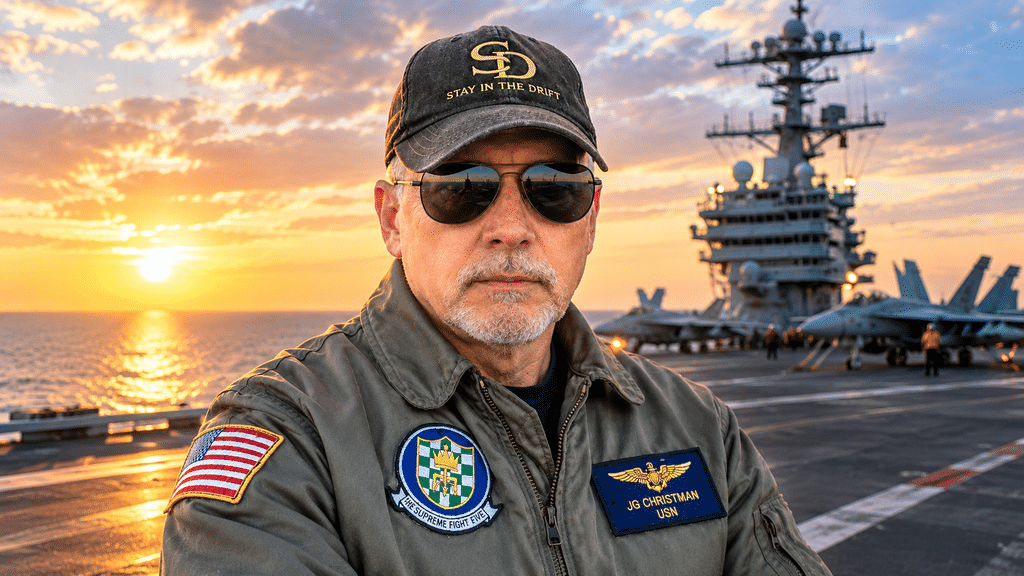
Christman’s nonfiction writing extends these interests into philosophy and the ethical challenges associated with technological change. His book Good and Evil in the Age of Simulation: Artificial Intelligence, Megatrends, and the Struggle for Human Agency examines questions about morality, judgment, and the influence of increasingly sophisticated information systems.
At the center of this subject is a question that reaches beyond technological capability: how can people determine what is right, meaningful, or beneficial when the information shaping their understanding can be filtered, personalized, or artificially generated?
The issue is especially relevant in an environment where digital platforms and AI-driven tools increasingly influence how information is produced and consumed. Access to more information does not automatically guarantee better judgment. Individuals must still assess credibility, recognize uncertainty, and take responsibility for their conclusions.
Christman’s philosophical approach considers the relationship between knowledge, ethical responsibility, institutional power, and individual freedom. Rather than treating technological advancement as an end in itself, his work asks readers to consider the values that should guide its development and use.
These themes connect naturally with his earlier professional experiences. Whether evaluating information in aviation, considering leadership decisions in business, or developing ideas through writing, the ability to question assumptions remains essential.
His nonfiction therefore offers an opportunity to reflect on a challenge facing modern society: preserving independent thought while adapting to systems that can influence perception and decision-making.
One distinctive aspect of Christman’s background is the range of disciplines represented in his work. Executive leadership, naval aviation, fiction, and philosophical commentary may appear to be separate pursuits, yet each involves questions of judgment, responsibility, and the relationship between individuals and larger systems.
In business, leaders must evaluate talent and make decisions that influence organizational direction. In aviation, professionals must interpret information accurately and respond to changing conditions. In literature, writers examine human motivations and imagine the consequences of different choices.
These experiences offer complementary ways of approaching complex problems. They also provide a framework for exploring subjects such as artificial intelligence, institutional change, strategic planning, and the future of human decision-making.
Christman’s writing reflects an interest in connecting these areas rather than considering them in isolation. His work encourages readers to think about the practical consequences of ideas and the importance of maintaining human judgment amid rapid change.
Joseph G. Christman’s professional and creative activities demonstrate how experience gained in one field can inform work in another. His career in executive leadership, service as a naval aviator, and development as an author represent different expressions of a continuing interest in strategy, human behavior, and the decisions that shape the future.
Through DHR Global, he contributes to the world of executive leadership and talent assessment. Through Flight Plan and his published books, he explores questions that extend into philosophy, technology, and society.
His journey also illustrates that professional development does not necessarily end when a person moves beyond one career. New interests can create opportunities to revisit established ideas, acquire fresh skills, and share insights with a wider audience.
As technological and social changes continue to challenge conventional thinking, Christman’s work remains focused on questions of consequence: how people evaluate information, how leaders exercise responsibility, and how individuals preserve their ability to think independently.
Ultimately, his story brings together service, leadership, and intellectual exploration. By drawing on experience while continuing to investigate new ideas, Joseph G. Christman demonstrates how a multifaceted career can provide a foundation for both professional contribution and creative expression.