 11
11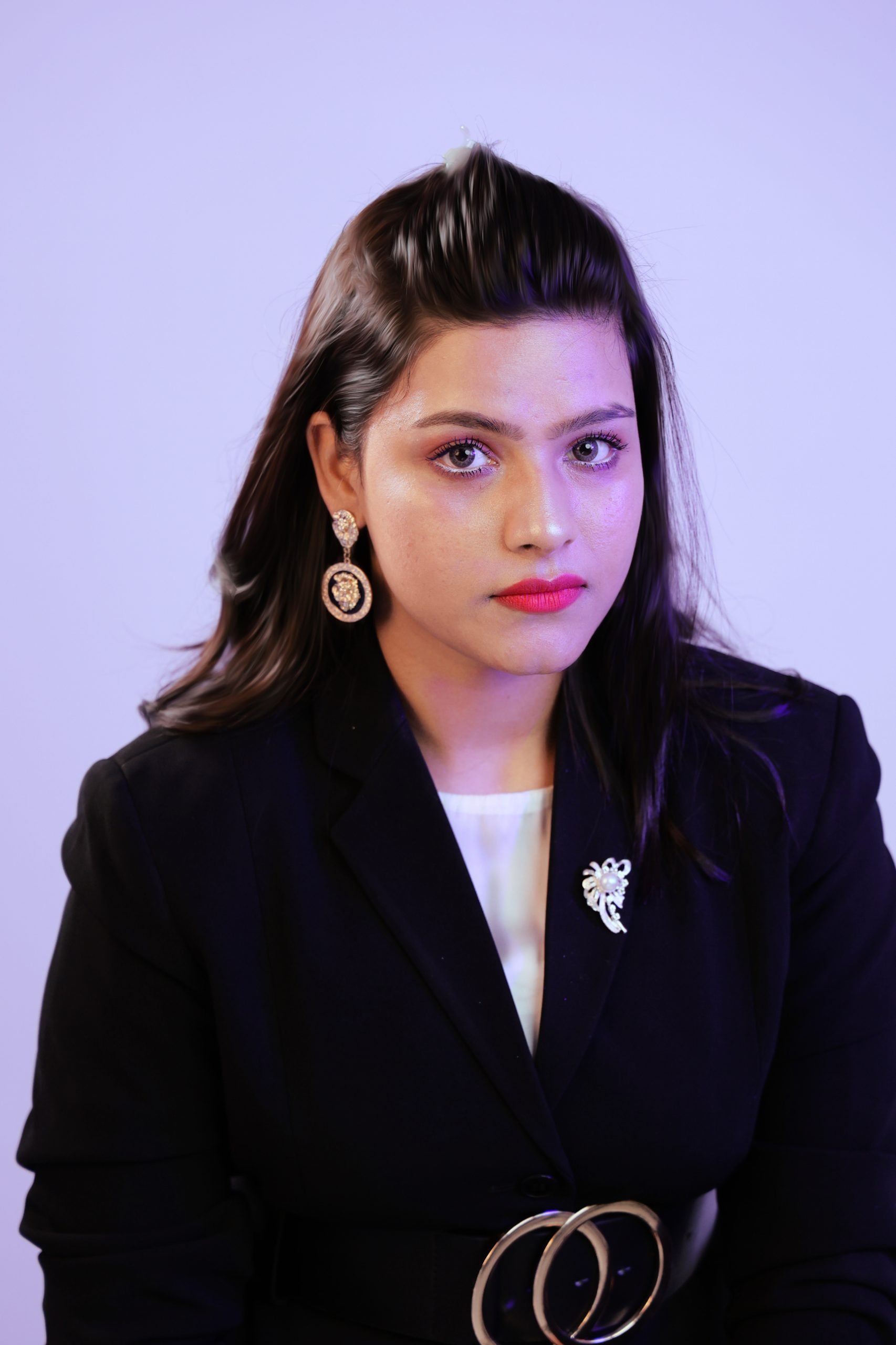
There is a particular kind of woman who does not simply enter a room—she resets its temperature. Zabrina Bareen has spent the better part of a decade being that woman: first as a face on the runway, then as a mind behind the campaign, and now as the Founder and CEO of Zee Jewels, a Dubai-born luxury house quietly redefining what it means to build a brand with both a spine and a soul.
To meet her is to understand, almost immediately, that titles were never going to be enough to contain her. Visionary Entrepreneur. Creative Director. Luxury Brand Strategist. Fashion Model. On paper, they read like four separate careers stitched together by ambition. In person, they read as one continuous sentence—a woman who never stopped adding clauses to her own story.
Ask her which of her titles she is proudest of, and she will gently resist the premise of the question. None of them, she insists, were ever meant to stand alone. The Founder in her sees the gap in the market before it becomes obvious to anyone else. The CEO builds the architecture sturdy enough to hold that vision upright. The Creative Director refuses to let that architecture become soulless. And the model—the woman who has stood under a hundred unforgiving lights and learned to hold her composure under scrutiny—is the part of her that never flinches in a boardroom full of people quietly deciding whether she belongs there.
“A brand is not a logo you build. It is a spine you grow—and mine was grown one difficult decision at a time.”
— Zabrina Bareen
It is this fusion of beauty and business, she says, that has defined everything she has built. Not two disciplines in competition, but two hands attached to the same body—one that has simply refused, from day one, to work with only one of them.
Long before Zee Jewels existed, Zabrina Bareen spent years making other people’s visions beautiful. She walked runways under names that were not hers, sat in creative rooms shaping campaigns that carried someone else’s brand at the top, and by most measures, she was exceptionally good at it. But somewhere inside that success, a quieter and more insistent question kept surfacing: What would she build if the name at the top were finally her own?
“The moment I stopped borrowing rooms and started building my own, everything I had ever learned finally had a home to live in.”
— Zabrina Bareen
That question became Zee Jewels—not the product of a single finished blueprint, but of a woman who finally gave herself permission to stop perfecting other people’s legacies and start building her own, deliberately, strategically, and without apology.
Zabrina Bareen is unsentimental about the difference between a brand that trends and a brand that endures. She has watched enough glamorous, well-funded launches disappear within a single season to know that trends are simply borrowed attention, while brands are earned trust. A lasting brand, she argues, understands something trends never do—that the customer is not purchasing an object, but a version of herself she is hoping to become.
“Luxury that cannot be trusted is simply expensive noise.”
— Zabrina Bareen
At Zee Jewels, every strategic decision—from sourcing to storytelling—passes through a single filter: Will this still mean something to the woman wearing it a decade from now? If the answer is uncertain, the idea does not leave the drawing board.
Her instincts as a Creative Director run in parallel. Positioning, she insists, is not a paragraph buried in a marketing deck—it is a feeling engineered on purpose, across every touchpoint, until it becomes instinctive to the person experiencing it. Long before a single word of brand copy is written, she is already asking what a woman should feel the moment she holds the product, walks into the boutique, or sees the campaign displayed on a billboard.
“Strategy tells a brand where to go. Creative direction decides how it feels to arrive there.”
— Zabrina Bareen
Zabrina Bareen speaks about the runway the way most executives speak about business school—as an unglamorous education disguised as glamour. The walk, she explains, was never about the individual step; it was about carrying an entire story across sixty feet of floor without ever letting the audience glimpse the discipline underneath it. Leadership, she has found, demands almost exactly the same thing.
“I learned to lead in front of a boardroom the same way I learned to walk in front of a camera—with my spine straight and my doubts left backstage.”
— Zabrina Bareen
Modelling, she adds, also taught her something few business schools ever will—how to be looked at without losing herself in the looking. As a CEO, she is constantly observed and constantly measured. The women who last, she believes, are the ones who learned long before the title arrived how to hold their presence steady under a spotlight that was never fully in their control.
She has never experienced fashion, modelling, and business leadership as separate rooms she moves between, but as one continuous language spoken in different accents—fashion teaching her the discipline of presentation, modelling the discipline of presence, and business the discipline of consequence.
“I did not leave the runway behind when I entered the boardroom—I simply lengthened my stride.”
— Zabrina Bareen
Inside Zee Jewels, the principle Zabrina Bareen returns to most often with her team is ownership over obedience. She has never wanted a team that merely executes instructions well; she wants a team that understands the vision deeply enough to protect it, even in the rooms where she is not present. That kind of loyalty, she says, cannot be demanded—it can only be built patiently by trusting people with real responsibility before they feel fully ready for it.
“A leader who must always be in the room has not built a team—she has built a dependency.”
— Zabrina Bareen
It is a philosophy that extends naturally into how she thinks about legacy. Profit, she says, tells you a business survived the quarter. Legacy tells you whether it deserved to. She thinks of legacy less as a monument and more as a residue—what remains in the people who worked alongside her, the women who wore what she built, and the young entrepreneurs who watched a woman lead a luxury company entirely on her own terms and quietly decided they could do the same.
“I am not building a company to be remembered. I am building a standard so that the next woman does not have to start from zero.”
— Zabrina Bareen
For the young woman who dreams of becoming a founder but does not yet see herself as the “CEO type,” Zabrina Bareen’s answer is direct: there is no such thing. There is only a woman who decided to start before she felt ready and kept building through the exact discomfort that once convinced her she was not the type.
She did not feel like a founder on the day she registered her first company—she felt like an imposter wearing someone else’s title. The feeling did not disappear because she became qualified for it. It disappeared because she outworked it.
“You do not need to feel like a CEO to become one. You only need to keep showing up as one, long enough for the feeling to catch up.”
— Zabrina Bareen
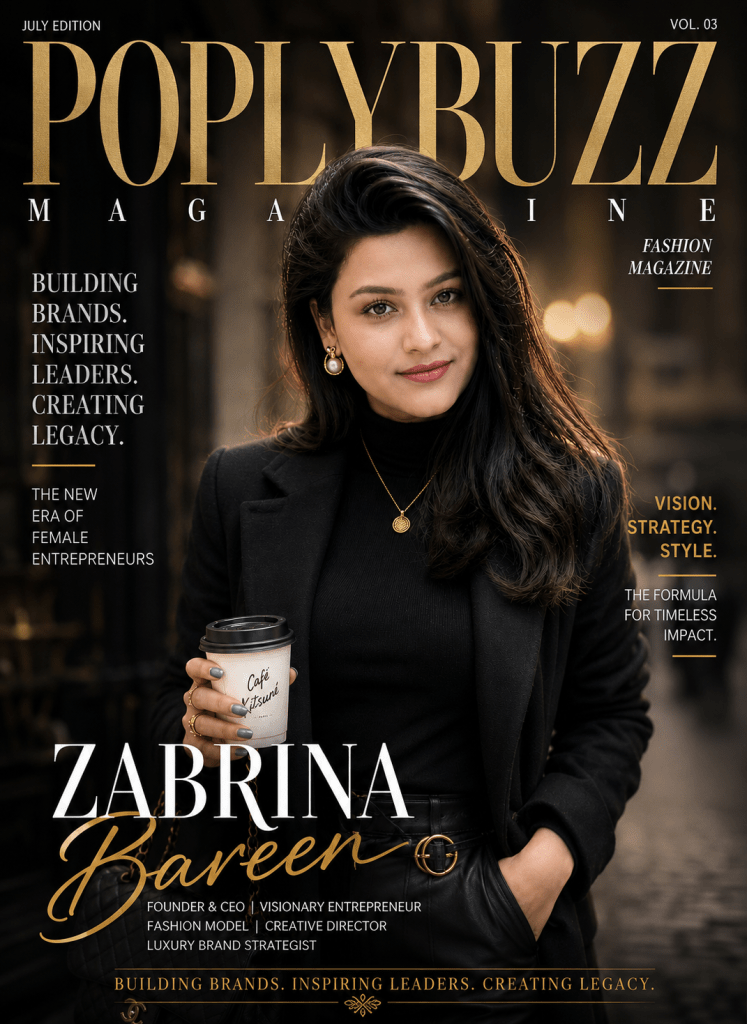
As PoplyBuzz names her among its Visionary Women Leaders to Watch, Zabrina Bareen’s closing message is less a mantra than a quiet instruction: build loudly with your work and quietly with your ego. The world, she warns, will try to convince every ambitious woman that visibility and value are the same currency. They are not.
Let the brand, the leadership, and the results speak in rooms where you are not even present—that, she says, is the truest sign that what you have built has outgrown your need to defend it.
“Build the kind of legacy that keeps working even on the days you are tired of proving yourself.”
— Zabrina Bareen
Every empire, she likes to remind the women who write to her, begins as one stubborn founder who refused to wait for permission. In Zabrina Bareen, PoplyBuzz finds precisely that woman—one who walked out of borrowed rooms, built her own address, and is only just getting started.